


Up Close
and Personal
This is the realm where every wrinkle tells a story, every blade of grass is a jungle, and every insect looks like it belongs in a sci-fi horror film. Close-ups are all about getting in your face—in the most artistic way possible. So, grab your lens and your patience, because we’re about to dive into the wonderfully invasive world of close-up art!

Faces and Phobias
Close-up art has been making people uncomfortable and fascinated for centuries. Back in the day, portrait artists figured out that the closer you got to a face, the more lifelike (and sometimes horrifying) it became. Think of those old Renaissance portraits where every pore and blemish is lovingly detailed—because nothing says “art” like an uncomfortably accurate mole.

Photography’s Big (Tiny) Break
With the advent of photography, close-ups got a technological boost. Suddenly, artists could capture details that the naked eye might miss. The first close-up photos were all about faces, capturing the essence of a person in ways that were both intimate and intrusive. Thanks, early photographers, for showing us what our great-great-grandparents’ nose hairs looked like.


Trigger Tokens:
close-up,
extreme close-up,
ultra-detailed,
detailed textures,
shallow depth of field,
shallow focus,
selective focus,
focus stacking,
edge contrast,
tight framing,
hyper-detail,
texture emphasis,
sharp focus,
realistic lighting,
emotional intensity,
magnified details,
surface reflections,
Prompt Starts:
A hyper-detailed close-up [medium] of [subject],
texture emphasis in close-up details of a [subject],
close-up [medium] of a [subject]
sharp focus close-up [medium] of a [subject]
realistic lighting in close-up details of a [subject]
abstract close-up composition details of a [subject]
magnified details in a close-up [medium] of a [subject]
surface reflection in close-up [medium] of a [subject]
Going Big by Getting Small
As technology evolved, so did close-up art. Enter the world of macro photography, where everything from flowers to insects became larger than life. Macro lenses allowed artists to explore the minute details of the world, turning everyday objects into stunning visual spectacles. A dewdrop on a leaf? A masterpiece. An ant carrying a crumb? A Herculean epic.


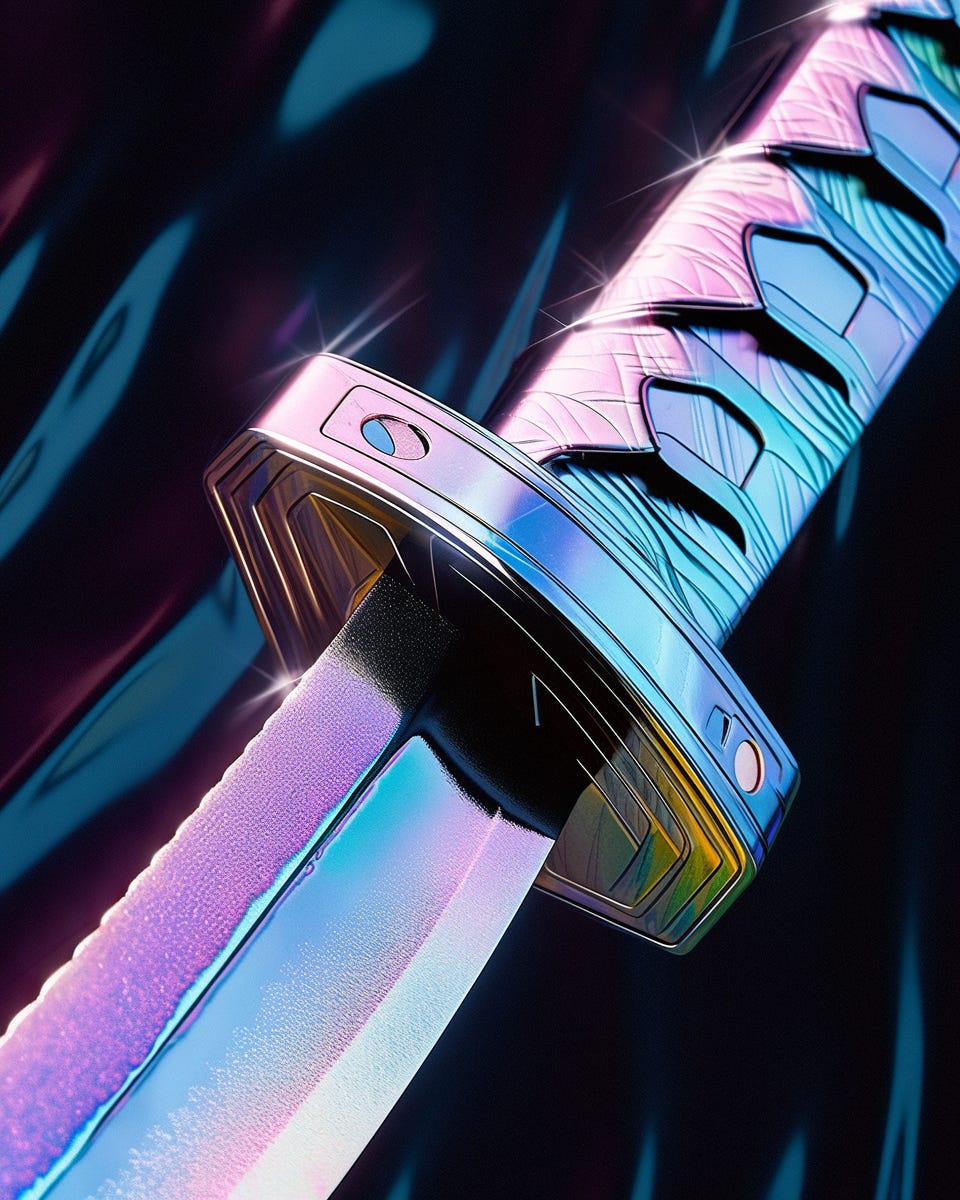
Hyper-Detail: Extremely detailed and precise rendering of the subject.
Macro Perspective: Enlarged view of small or intricate parts of a subject.
Texture Emphasis: Focus on the texture and surface details.
Vibrant Colors: Use of bright and intense colors to highlight details.
Sharp Focus: Clear and crisp depiction of the subject without blurring.
High Contrast: Strong differences between light and dark areas.
Minimal Background: Little to no background distractions, keeping the focus on the subject.
Realistic Lighting: Accurate and detailed portrayal of light and shadow.
Natural Elements: Focus on natural subjects like flowers, leaves, or human features.
Abstract Close-Ups: Close-up views that create abstract compositions.
Emotional Intensity: Capturing the emotional essence of the subject.
Magnified Details: Enlarging small details to make them the central focus.
Surface Reflection: Attention to reflective surfaces and how they interact with light.
Zooming in on Emotions
Close-ups aren’t just for still images. In the world of film, the close-up shot has become a powerful tool for storytelling. Directors like Alfred Hitchcock and Sergio Leone used close-ups to heighten tension, reveal emotion, and make sure you knew every bead of sweat on an actor’s forehead. It’s like the film equivalent of whispering in someone’s ear—intense, personal, and impossible to ignore.

The Good, the Bad, and the Uncomfortably Detailed
Close-up art has a unique ability to draw viewers in while also making them squirm. There’s something inherently intimate about seeing something up close, whether it’s a person’s face or the intricate details of a flower. But with intimacy comes intrusion, and not everyone is comfortable with having their space—or their face—invaded. It’s a delicate balance, like trying to hug someone holding a nervous porcupine.

The Beauty of the Mundane
One of the greatest impacts of close-up art is its ability to find beauty in the mundane. A close-up shot can turn an everyday object into a work of art, revealing textures, patterns, and details that are normally overlooked. It’s like having a superpower that makes everything interesting, from the bark of a tree to the feathers of a bird.

Chuck Close: Known for his massive-scale, photo-realistic portraits, Chuck Close’s close-up artworks focus on the intricacies of human faces with incredible detail.
Georgia O'Keeffe: Famous for her close-up paintings of flowers, O'Keeffe’s work emphasizes the delicate details and vibrant colors of her subjects.
Lucian Freud: His close-up portraits and nudes capture the raw, unfiltered details of his subjects, highlighting texture and form.
Jan van Eyck: A master of early Netherlandish painting, van Eyck’s close-up details in his works reveal a meticulous attention to texture and light.
Richard Estes: An American photorealist, Estes' close-up cityscapes and reflections capture urban details with precise clarity.
Frida Kahlo: Her self-portraits often feature close-up compositions, focusing on her facial expressions and emotions with vivid detail.
Dorothea Lange: Known for her impactful close-up portraits during the Great Depression.
Robert Mapplethorpe: Renowned for his highly detailed close-up photography.
Irving Penn: Famous for his close-up fashion and portrait photography.
Edward Weston: Known for his close-up studies of natural forms.
Stanley Kubrick: Filmmaker noted for his effective use of close-ups in cinema.
Close-Ups in the Digital Age
Today, close-up art is more accessible than it ever was. With high-resolution cameras on every smartphone, anyone can take a pretty good close-up, turning the ordinary into the extraordinary with just a pinch of zoom. Literally.

Future Zoom
From its early days of detailed portraits to its modern-day macro marvels, close-up art is all about getting up close and personal. It’s an art form that celebrates the details, finds beauty in the small things, and sometimes makes you a little uncomfortable. Here’s to close-up art, the ultimate celebration of details AND flaws. ✌️