Midjourney v5.2 👆 Prompt: superflat subaru wagon street, Takashi Murakami, hyper-realistic details gravure manga, hyper-realistic details, pulp comics, mori kei, superflat style, pop culture, high culture, postmodern, vibrant colors, whimsical, Japanese contemporary art, consumer culture --niji 5 --ar 4:5

Initiated by the artist Takashi Murakami, the Superflat movement is characterized by its flat planes of color, absence of perspective, and merging of traditional Japanese aesthetics with contemporary culture and commentary. This genre is often associated with the "kawaii" culture, consumerism, and a critique of post-war Japanese society.

superflat, superflat-style, Takashi Murakami, manga-inspired, anime-inspired, kawaii, pop-culture, high-culture, whimsical, postmodern, vibrant, Japanese contemporary, consumer culture
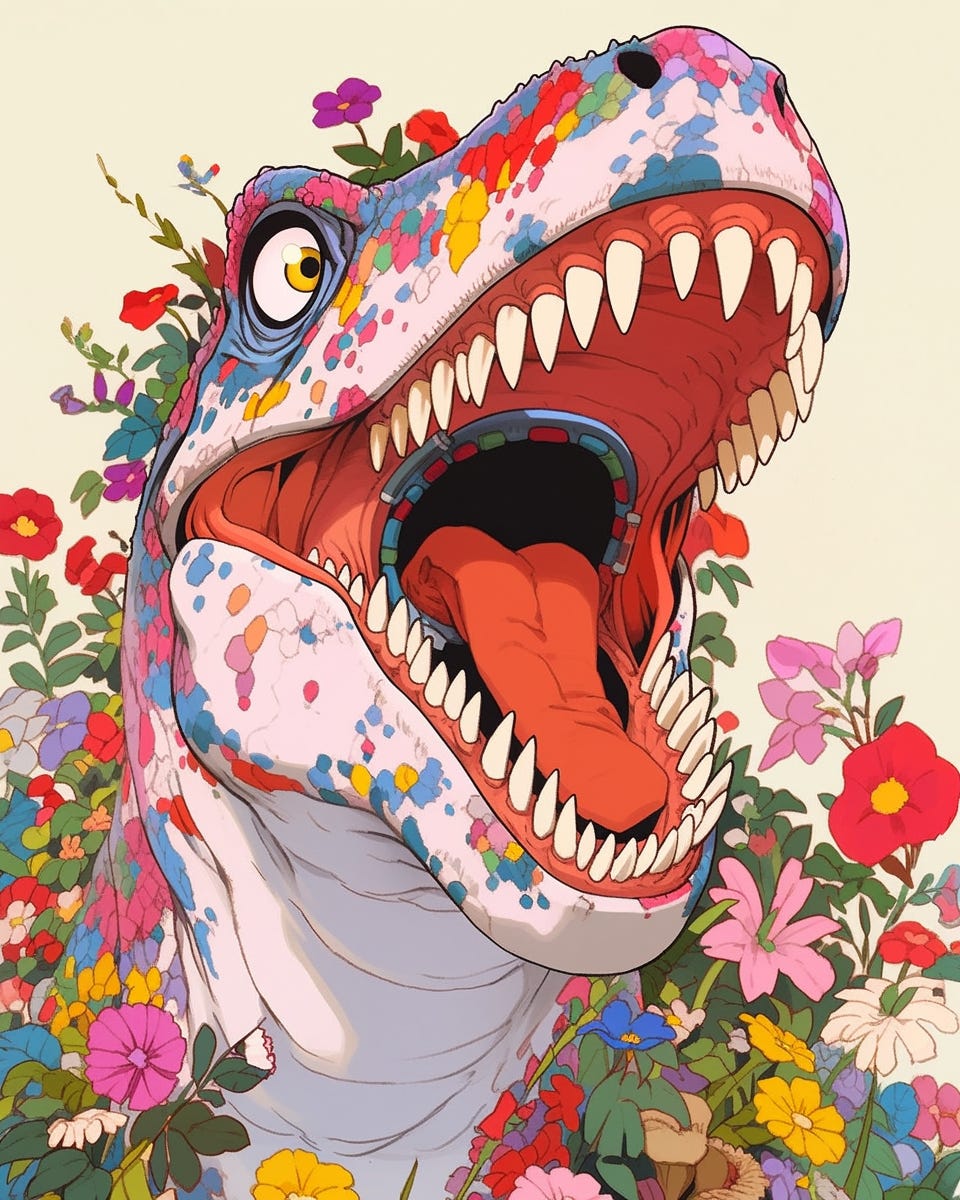
Midjourney v5.2 👆 Prompt: superflat, Takashi Murakami, T-rex character, hyper-realistic details, pulp comics, mori kei, superflat style, pop culture, high culture, postmodern, vibrant colors, whimsical, Japanese contemporary art, consumer culture --niji 5 --ar 4:5

Flat, two-dimensional planes devoid of perspective, contributing to its "superflat" appearance.
Bold and vivid color palettes that are often jarring or highly contrasting.
Merging of fine art and popular culture, particularly elements of manga and anime.
Themes often include consumerism, technology, and social critique.
Wide application in fine art, commercial art, fashion, and even film and animation.

Founded in the late 1990s by artist Takashi Murakami, the Superflat movement was originally conceived as a commentary on post-war Japanese culture, as well as an examination of the lines dividing high art from low culture. The movement has since gained international prominence and expanded to include a range of artists and mediums.
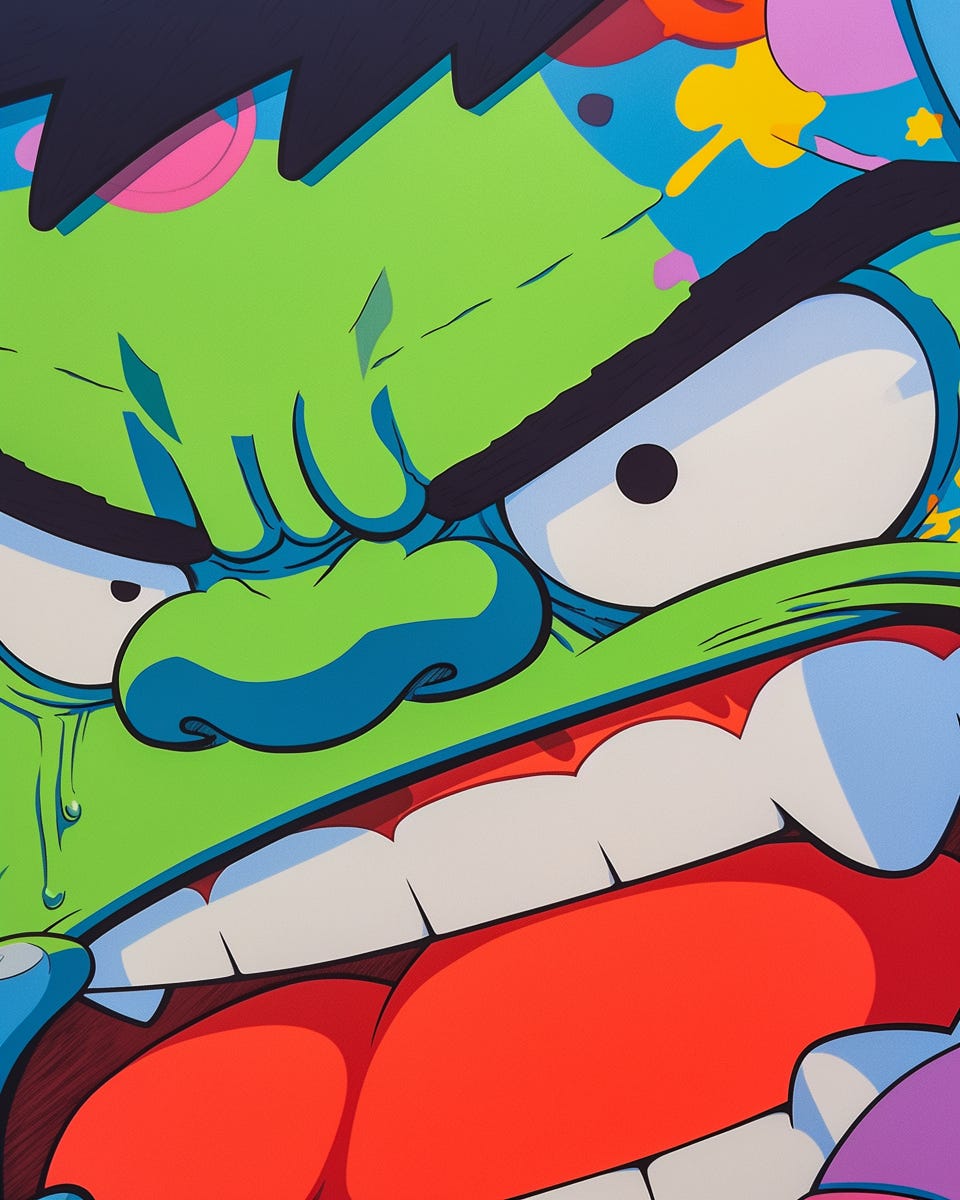
Midjourney v5.2 👆 Prompt: close-up superflat the hulk superflat-style, Takashi Murakami, manga, anime, pop-culture, postmodern, vibrant, Japanese contemporary, consumer culture --ar 4:5 --niji 5

Takashi Murakami (Founder of the Superflat movement)
Yoshitomo Nara (Known for his childlike figures that embody complex emotions)
Chiho Aoshima (Recognized for her dream-like, fantastical worlds)
Aya Takano (Famed for her ethereal, otherworldly depictions)
KAWS (An American artist influenced by Superflat aesthetics)

30 Midjourney Patterns to try with --tile
This list of different patterns is perfect to try with Midjourney’s --tile parameter.
What is the --tile parameter?
It’s another incredible function of the Midjourney bot, and when added at the end of your prompt it generates tiles of perfect seamless patterns according to your prompt subject(s) and style(s).
Combine it with the --ar parameter make these seamless tiles and bricks in any aspect ratio/size, that you can digitally “stack” in Photoshop or Canva to fill endless spaces.
Using Remix functions other than “vary subtle” or “vary strong” will break the seamless edges of the pattern.
Please note that with each pattern I include a short descriptor so feel free to use some of that as part of your text prompt - I find it super helpful to add the right amount of context and details in my prompts, hopefully this is a little bit of in-line inspiration.
Let’s dive into this list of patterns:
Geometric: Hexagons, triangles, or squares arranged in a grid.
Floral: Realistic or abstract flowers, leaves, and vines.
Polka Dots: Uniform or varied sizes, spaced evenly or randomly.
Paisley: Teardrop shapes with intricate details inside.
Chevron: Zigzag lines intersecting at a single point.
Herringbone: Broken zigzag lines, resembling fish bones.
Stripes: Horizontal, vertical, or diagonal lines.
Checkerboard: Alternating squares, often two colors.
Gingham: Intersecting stripes forming squares.
Plaid: Crosshatch of varying widths and colors.
Camouflage: Blended shapes mimicking natural environments.
Ikat: Fuzzy, dyed patterns resembling tie-dye.
Quatrefoil: Four-lobed, clover-like shapes.
Damask: Elegant, symmetrical designs, often floral.
Honeycomb: Interlocking hexagons resembling a beehive.
Argyle: Overlapping diamond shapes with internal lines.
Marbled: Swirled, organic forms like marbling on paper.
Toile: Complex scenes, often pastoral, in one color.
Batik: Created using wax-resist dyeing techniques.
Mosaic: Small, individual tiles (tesserae) forming a larger pattern.
Animal Print: Leopard spots, zebra stripes, snake, etc.
Optical Illusion: Patterns that trick the eye into seeing movement.
Ombre: Gradual transition from one color to another.
Pinwheel: Radial shapes emanating from a central point.
Watercolor: Soft, blended colors mimicking watercolor paint.
Houndstooth: Alternating jagged checks, often black and white.
Aztec: Geometric shapes inspired by ancient Aztec art.
Lattice: Interlocking or overlapping lines forming squares or diamonds.
Spiral: Radiating curves forming a spiral shape.
Abstract: Non-representational shapes and colors.