


Wrap The World
In Woolly Wonder!
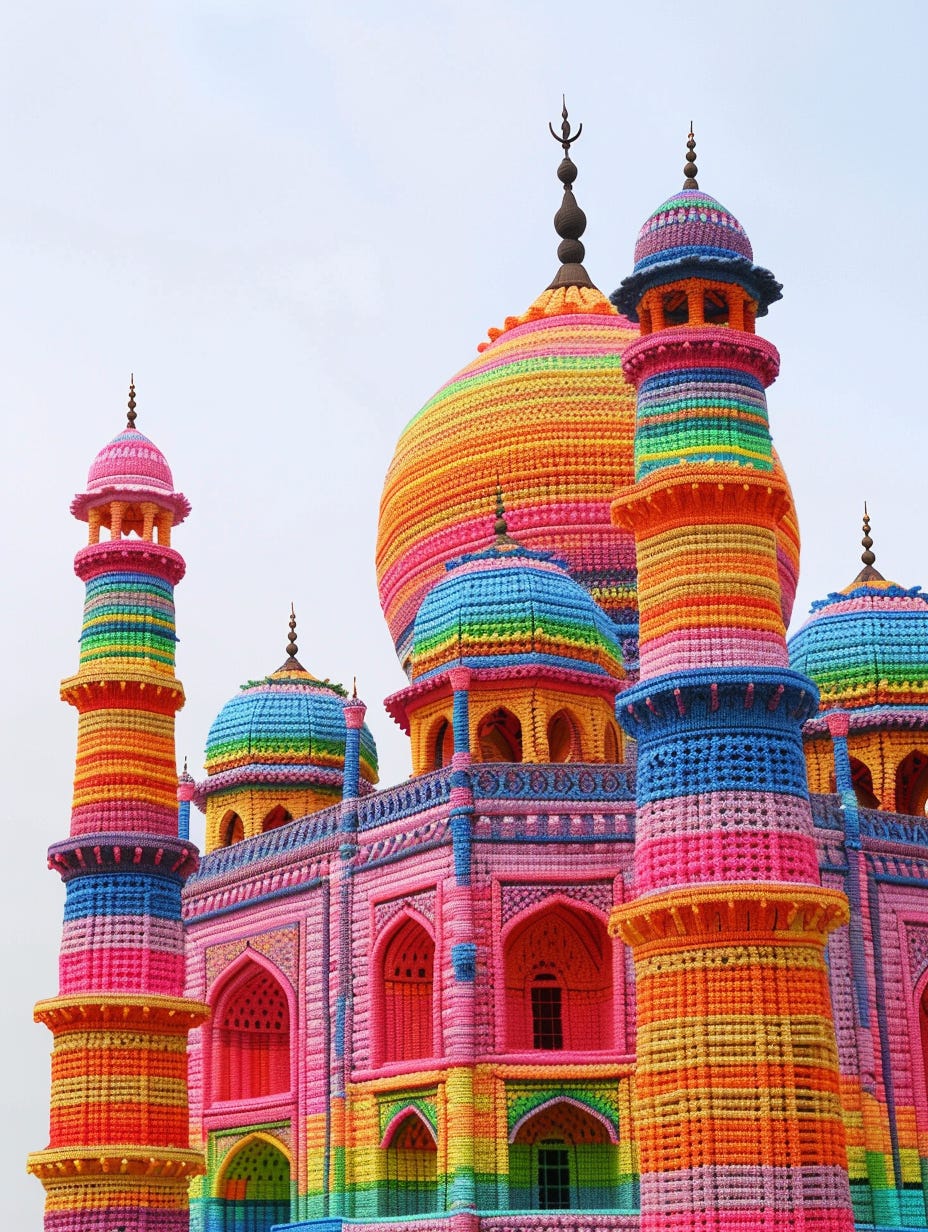
Imagine walking down the street on a chilly morning and finding the lampposts cozy in colorful knitwear, and the trees dressed in bright, woolly jumpers. Welcome to the whimsical world of yarn bombing, where craft meets graffiti in a soft, squishy embrace of public spaces. It's like Banksy got a grandma who decided that the streets needed a touch of homemade charm.

Once Upon a Stitch: The First Loop
It all began with a humble notion that public fixtures could use a little warming up. Yarn bombing first sprouted in the early 2000s, with crafty rebels like Magda Sayeg, who saw a single doorknob in need of a knit hat. From there, it snowballed into a global movement, covering everything from park benches in Paris to buses in Brazil with yarn.

Guerrilla Knitters: The Early Knitwork
These pioneers swapped spray cans for skeins of yarn, taking graffiti’s ethos and filtering it through the eye of a knitting needle. These aren’t your typical vandals; they’re grandmothers, students, and everyone in between, using their needles as paintbrushes and cities as their canvases.

Tag-Style Trigger Tokens:
yarn bombing,
crochet style,
guerrilla knitting,
woolen graffiti,
knit graffiti,
textile transformation,
knitwork,
knit-work,
urban knitting,
colorful crochet,
vibrant yarn,
textile art,
crochet art,
Story-Style Trigger Tokens:
whimsical yarn designs,
in the style of crochet art,
in the style of yarn bombing,
yarn bombing art style,
detailed yarn design,
intricate crochet knitwork,
colored yarn crochet art,
yarn crochet patterns,
crochet yarn elements,
knitted crochet yarn,
knitted crochet textures,
From Niche to Knitstream
Yarn bombing knitted its way into the heart of pop culture, evolving from obscure craft circles to a recognized form of urban art. It’s more than just decoration; it’s a statement of reclaiming and softening our harsh urban environments.
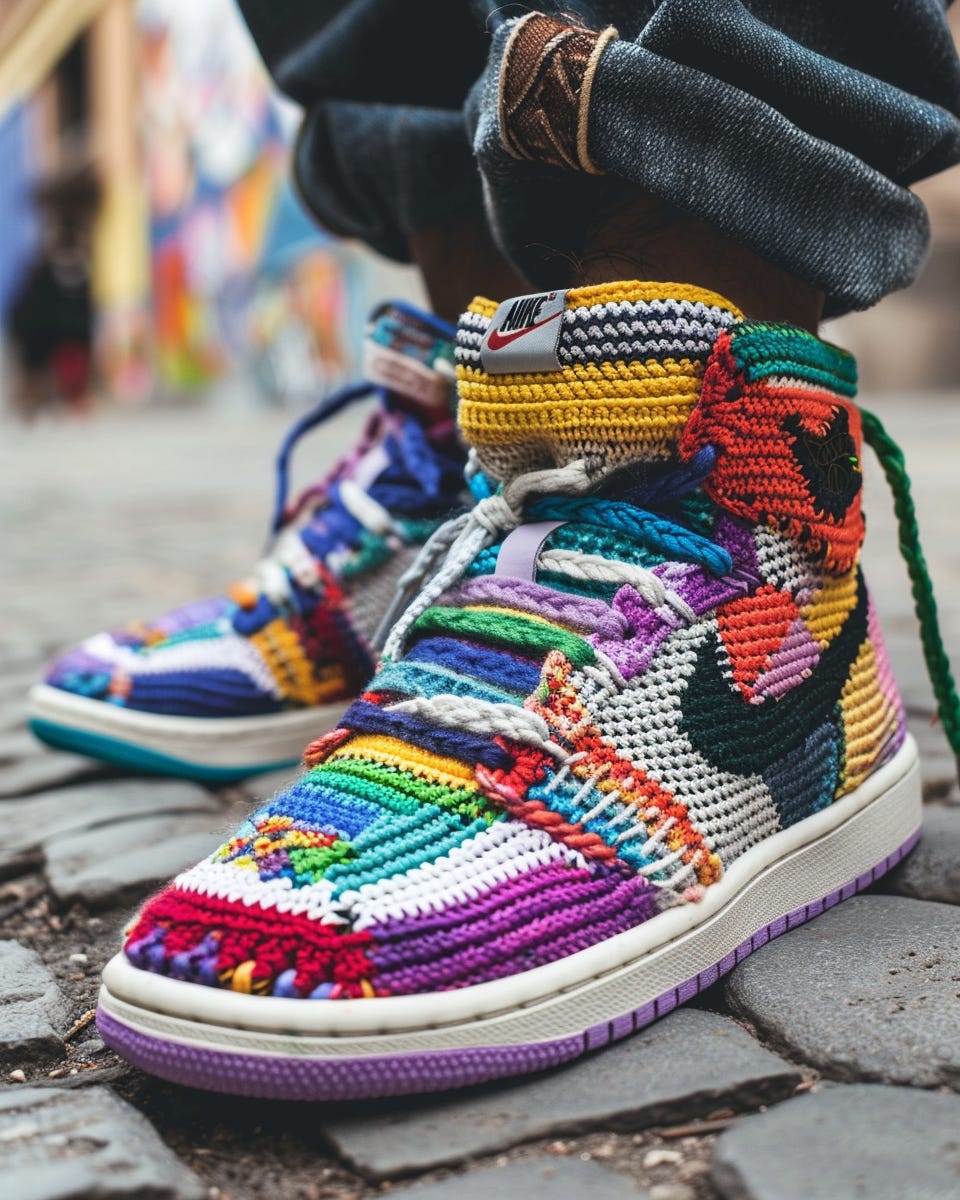

Vibrant Colors: Use of bright, bold, and contrasting colors to catch the eye.
Intricate Patterns: Detailed crochet or knit patterns that showcase craftsmanship.
Whimsical Designs: Fun, playful, and often humorous subjects.
Public Spaces: Installation in urban and outdoor environments, such as trees, lampposts, and benches.
Surprise Element: Unexpected placement in everyday settings to create a sense of surprise and delight.
Temporary Art: Often designed to be temporary, adding to the ephemeral nature of the work.
Textile Art: Use of yarn, wool, and other textile materials.
Collaborative Projects: Frequently involves community participation and collaboration.
Cultural References: Incorporates elements of local culture, history, and symbols.
Environmental Integration: Blends with the natural or built environment in creative ways.
Social Commentary: Can include themes of social, political, or environmental commentary.
3D Textures: Use of various textures and 3D elements to create depth and dimension.
Community and Connection
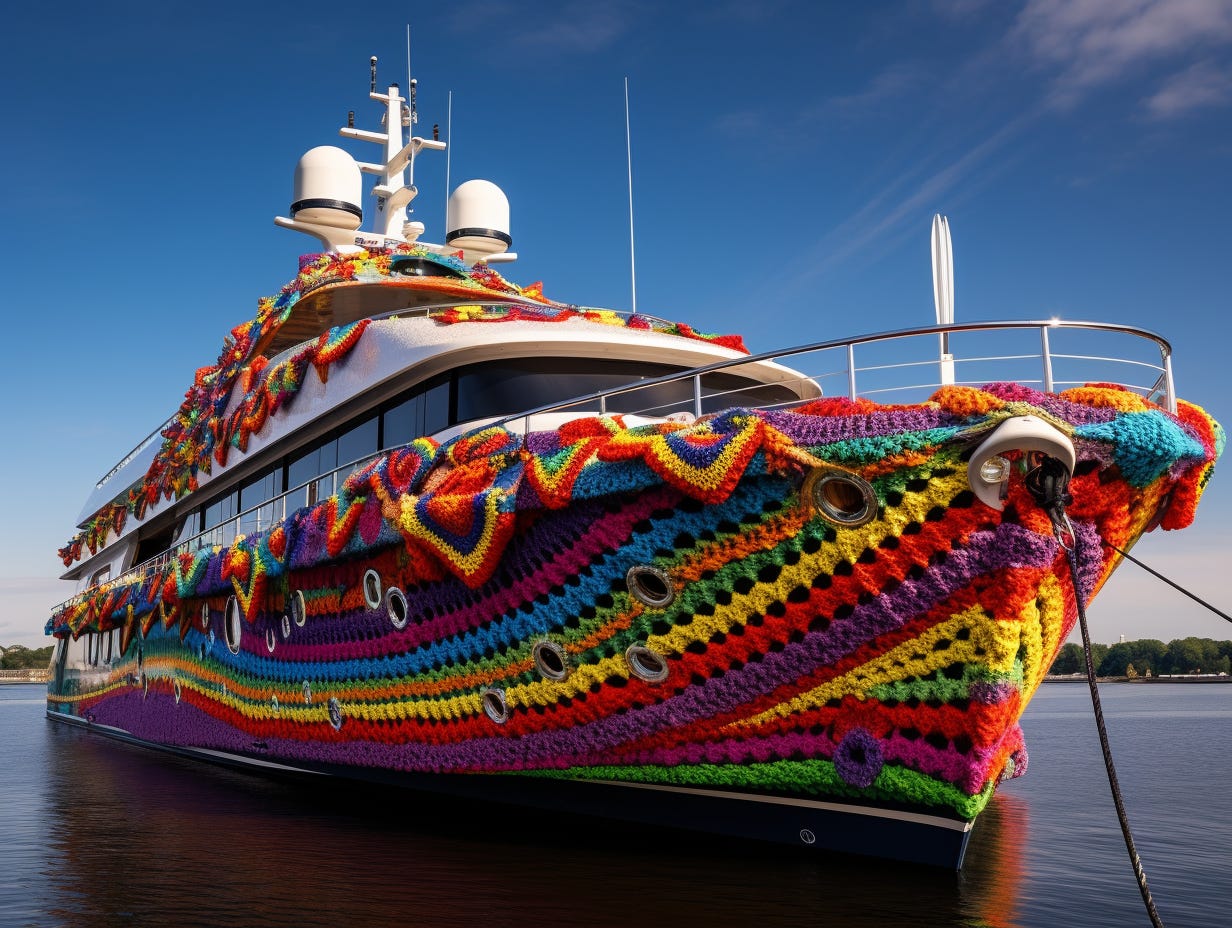
Yarn bombings often turn into community projects, bringing together people of all ages to weave a tapestry of local pride and creativity. These colorful interventions can transform mundane public spaces into interactive, tactile art exhibits.
A Softer Touch to Street Art
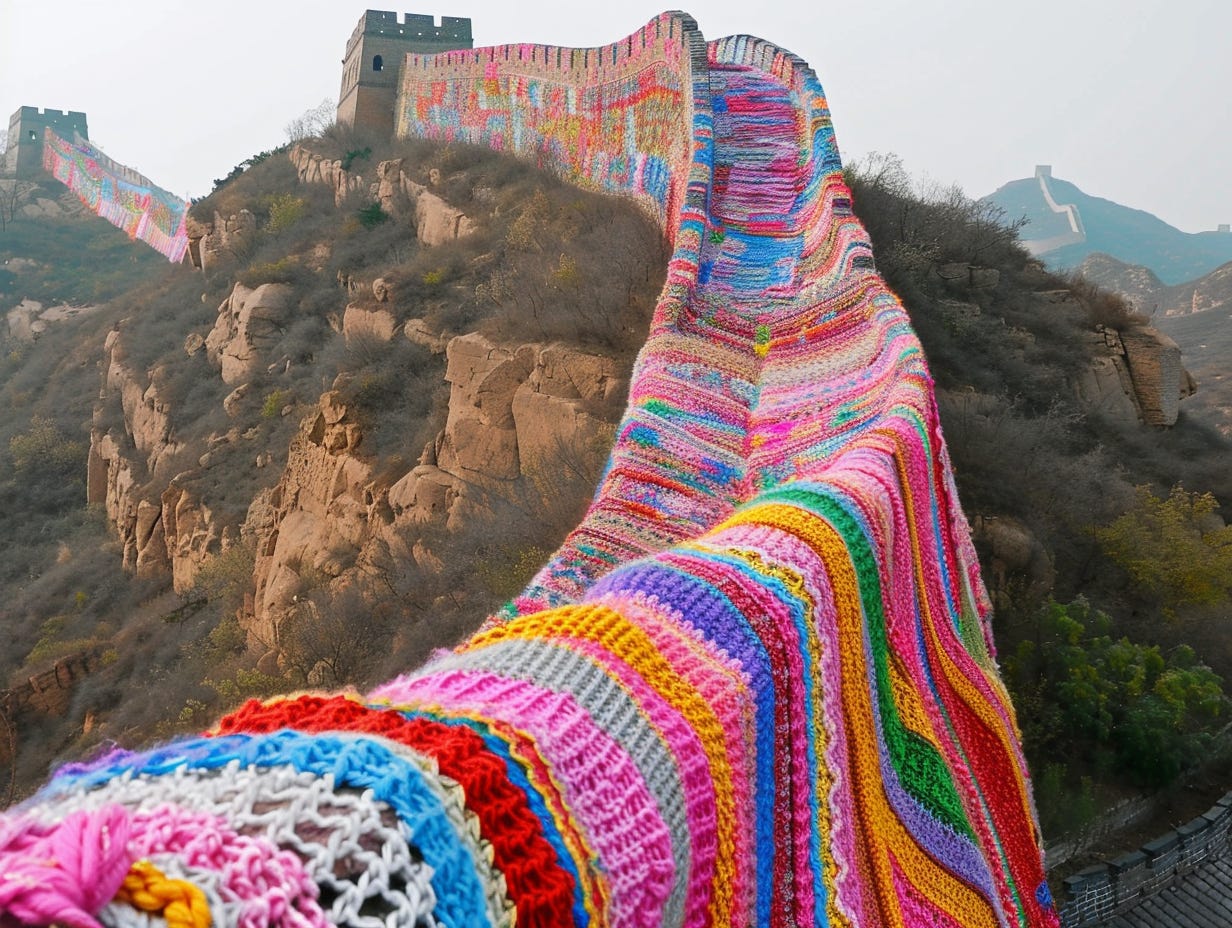
Yarn bombing challenges traditional perceptions of street art, introducing a playful, nurturing element to the often aggressive urban landscape. It’s a feminist twist on graffiti, softening the public view on both street art and the stereotypes of knitting as a passive, female activity.
Notable Threads: Iconic Yarn Bombs
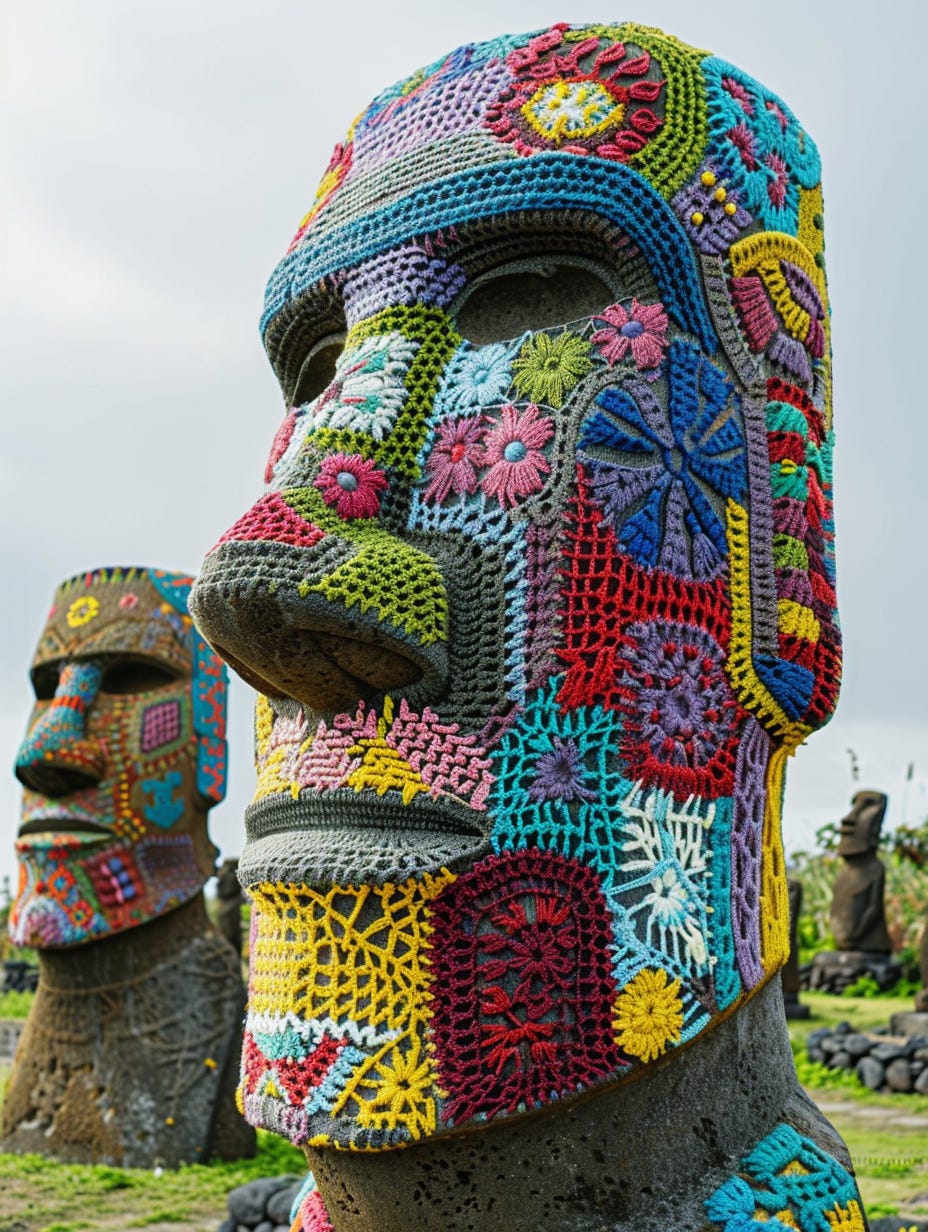
From the cobblestones of Copenhagen to the subways of Seoul, some yarn bombs have become local legends, such as the "Rocky" statue in Philadelphia sporting a pink tiger-striped sweater. These masterpieces show that yarn bombers aren’t just crafters—they’re hardcore artists with a flair for the fleece.
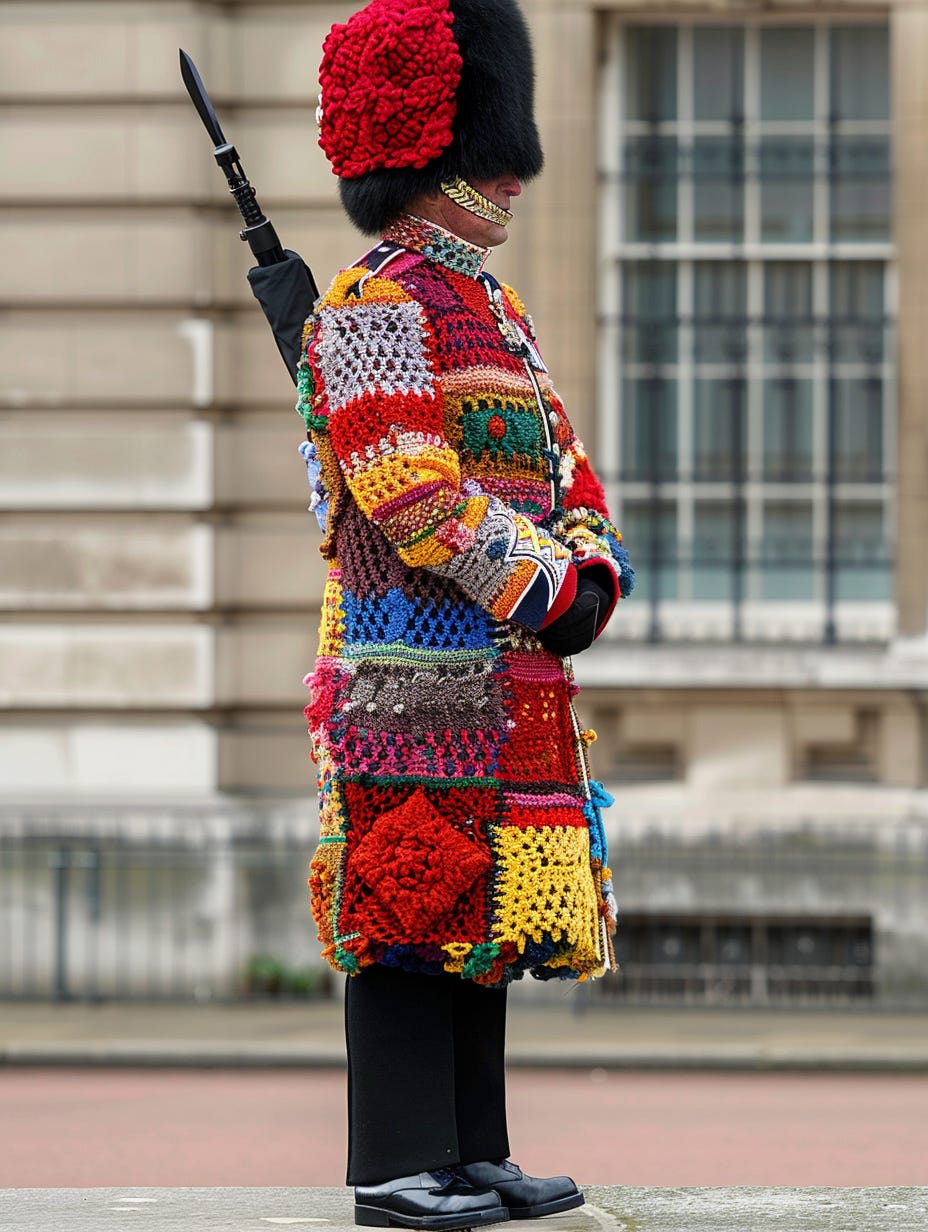

Magda Sayeg: Often referred to as the mother of yarn bombing, Magda Sayeg started the global yarn bombing movement with her vibrant and unexpected installations.
London Kaye: Known for her large-scale public installations and whimsical designs, London Kaye has brought yarn bombing to a wide audience through her colorful and playful works.
Stephen Duneier: Also known as Yarnbomber, Duneier's large-scale and often politically charged yarn bombings have garnered significant attention and appreciation.
Toshiko Horiuchi MacAdam: An artist whose large, interactive crochet installations in public spaces and playgrounds have captivated audiences, blending art and play.
Olek: A contemporary artist who uses crochet and yarn bombing to make bold statements on social and political issues, transforming everyday objects and spaces.
Naomi RAG: A prominent figure in the UK yarn bombing scene, Naomi's detailed and imaginative yarn installations often incorporate elements of local culture and history.
Eco-Yarns and Sustainability
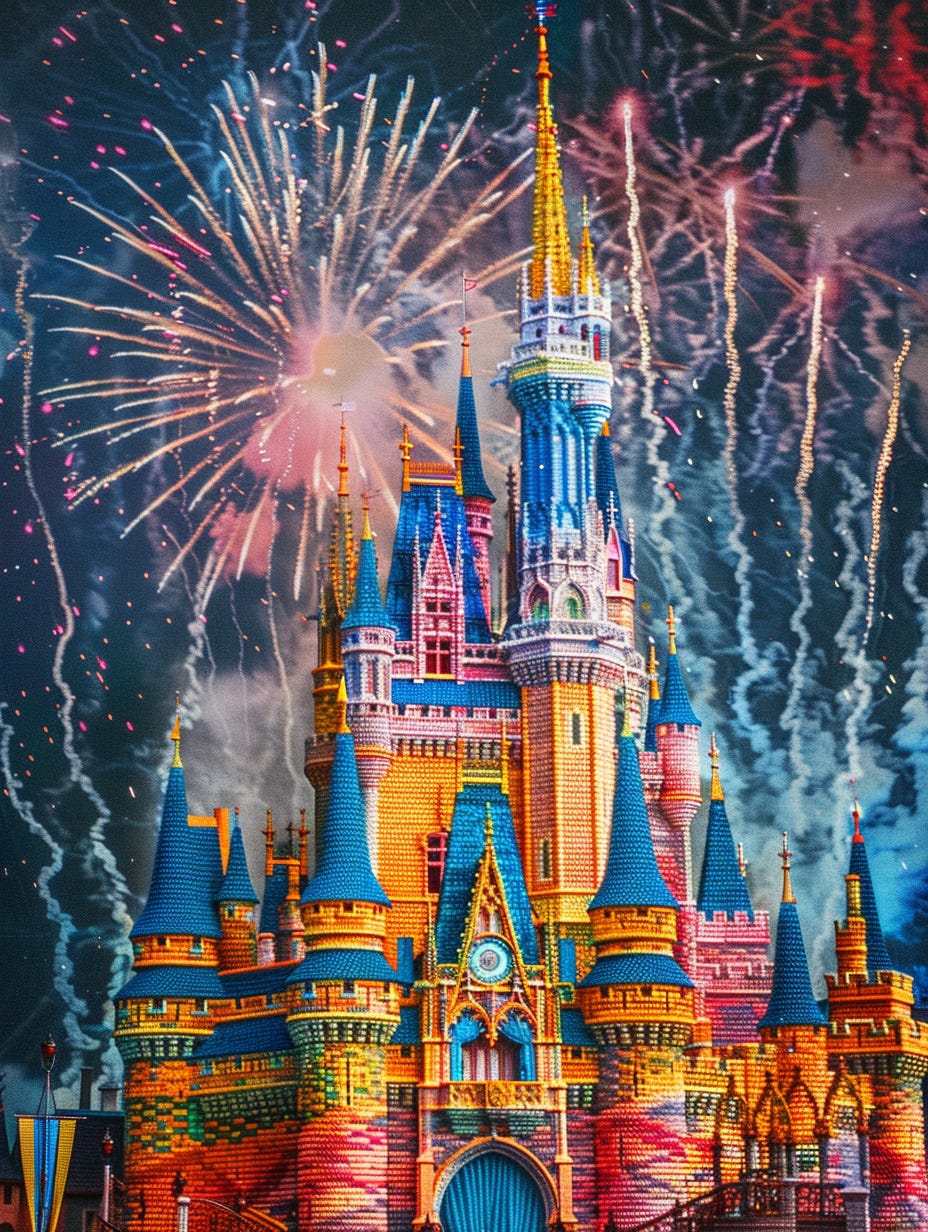
As the world becomes more eco-conscious, yarn bombers are turning to sustainable practices, using recycled materials and natural fibers to ensure their art leaves a positive impact on the environment as well as on aesthetics.
Yarn Bombs Away
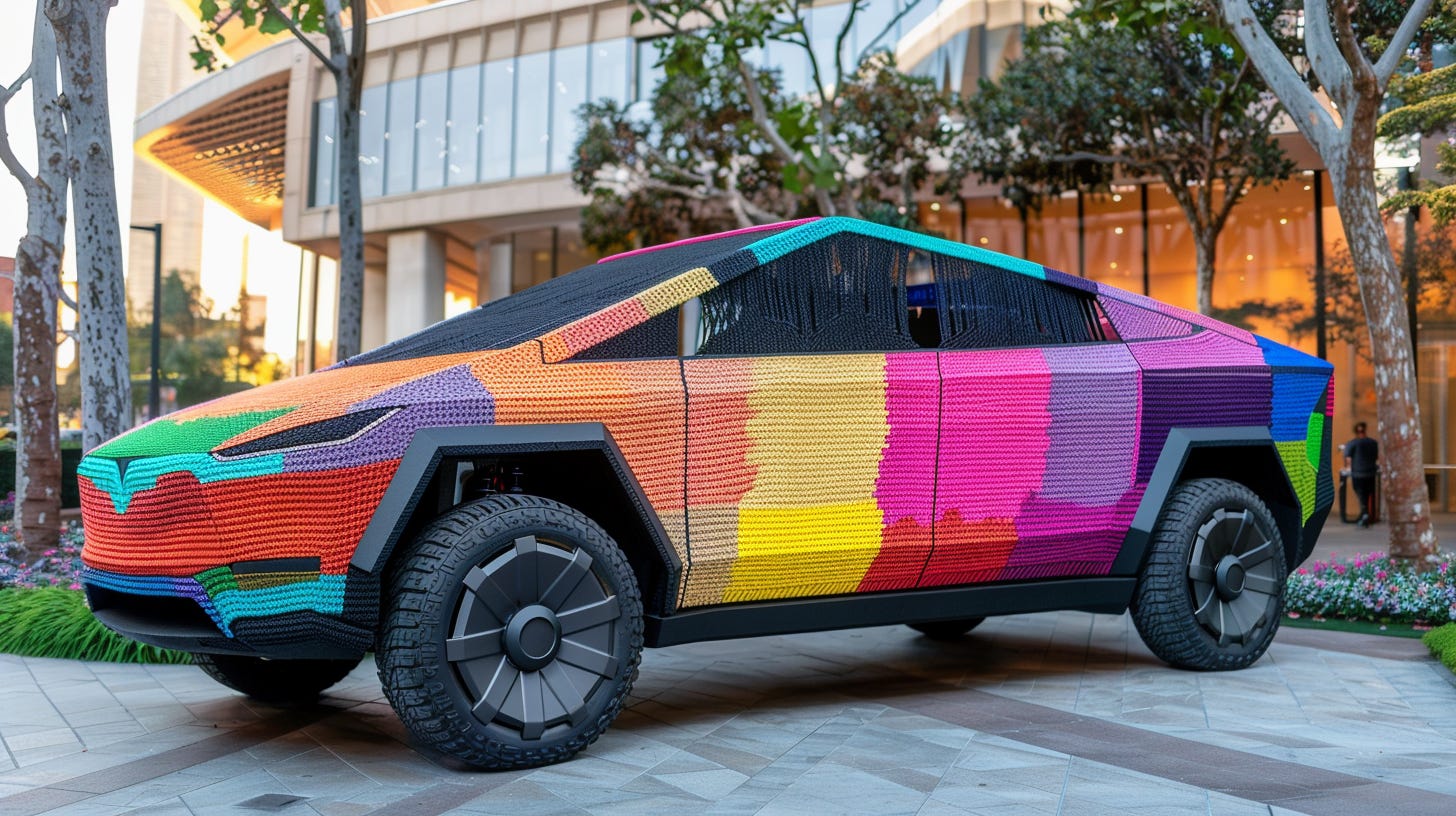
Remember that this vibrant art form does more than beautify our streets—it weaves together communities, challenges artistic norms, and wraps the cold concrete of our cities in a warm embrace. So, next time you see a statue sporting a scarf or a tree dressed in a sweater, take a moment to appreciate the crafty, cozy world of yarn bombing. Who knows, maybe it’s time to pick up those knitting needles and join the woolly revolution! ✌️