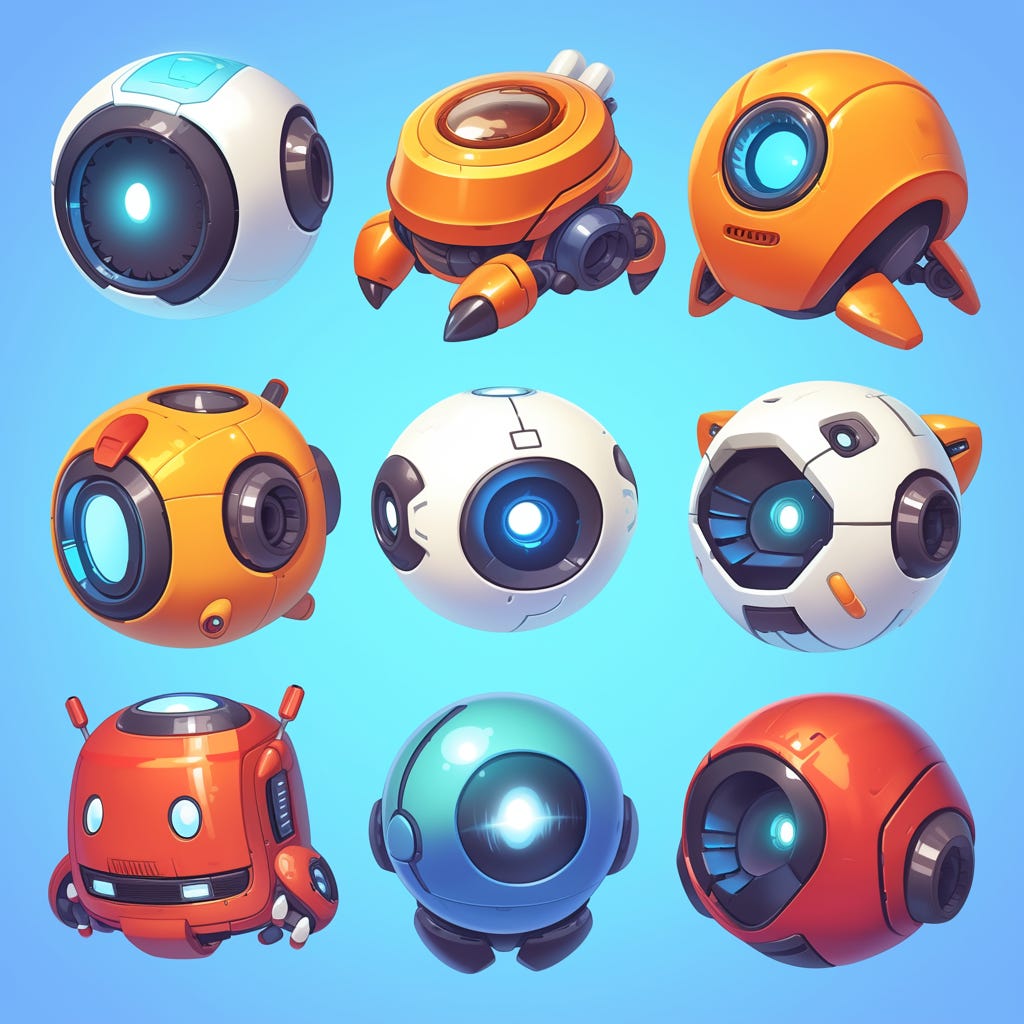
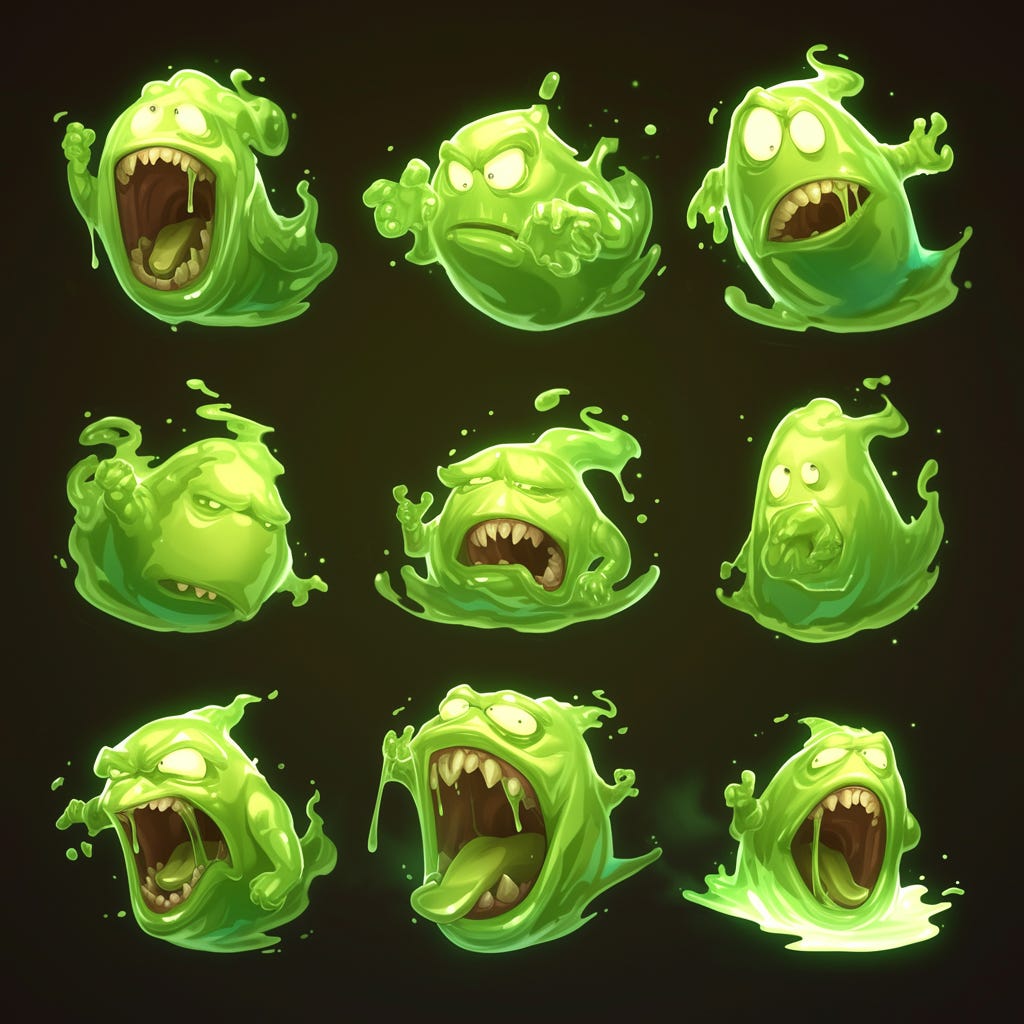
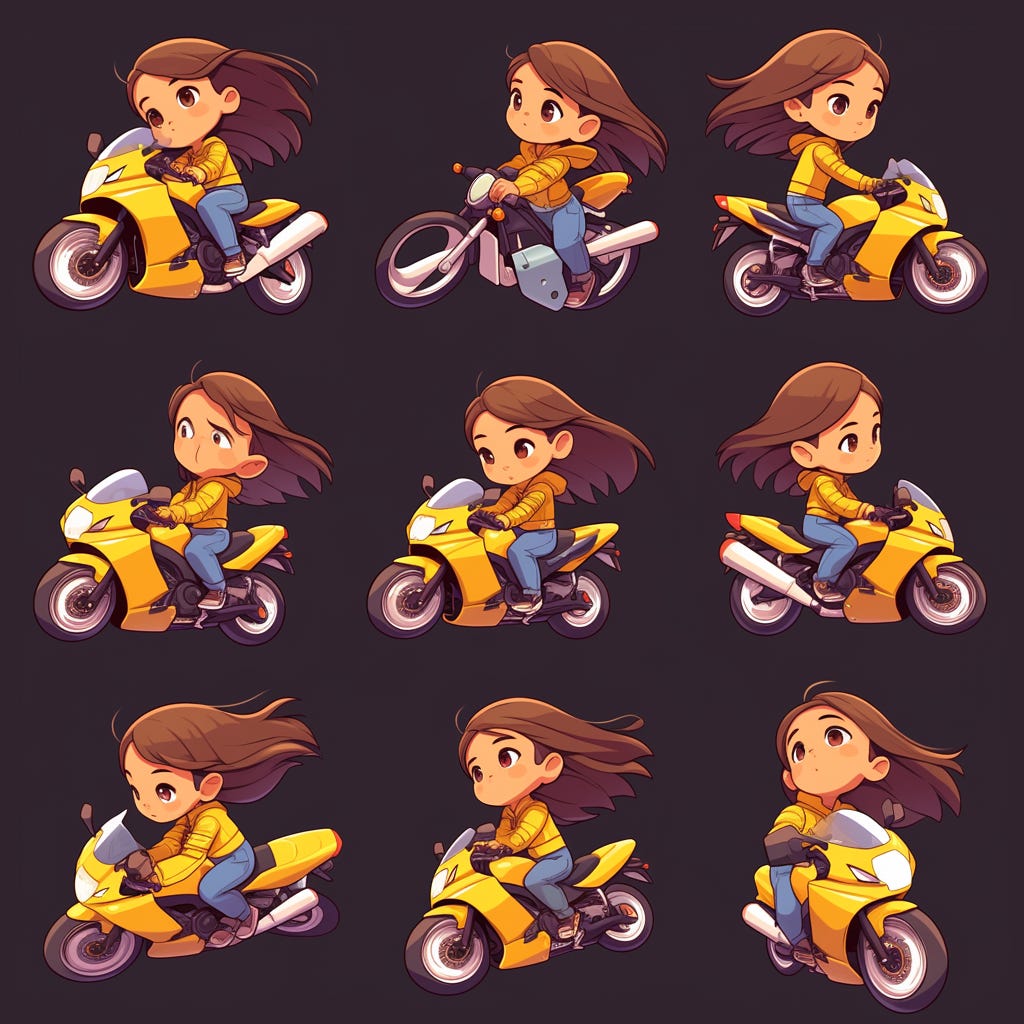
FYI
Although traditionally sprite sheets are used for basic, repetitive, character frame by frame animations, this is about generating multiple assets with a consistent look and feel on a single image. My goal here is to create asset sets, icons, characters, objects etc.
However…
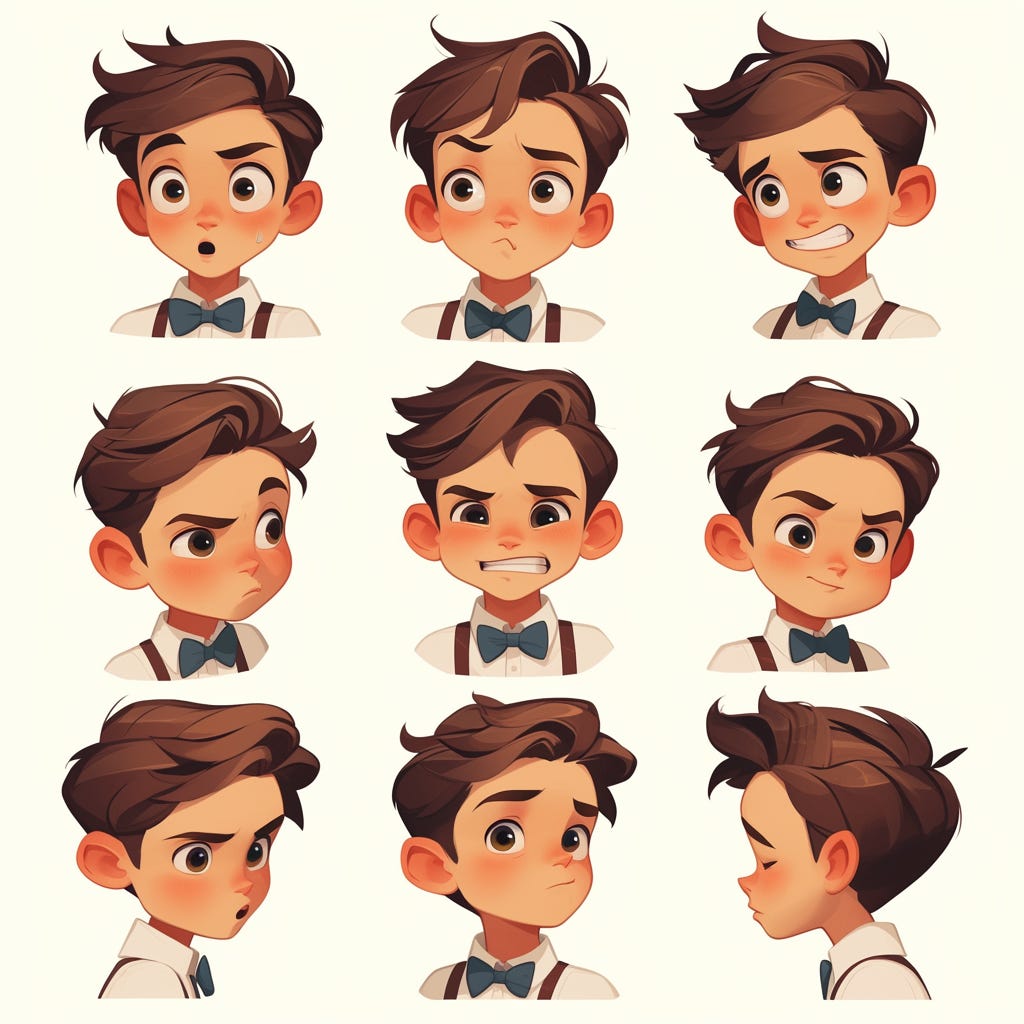
These prompts can also be used for generating a single character sheet, or character “turnaround” sheet, that could be used as assets for a comic book or illustrated story.
PS
To get the most out of these character sheets you have a pretty great toolbox right in discord starting with Midjourney’s upscale and vary controls

Vary (Subtle) and Vary (Strong) are great tools in pretty much all cases—As a trained art director I want to see more options and different iterations. Tbh, I use one of these two controls more than once on EVERY SINGLE generation I like.
But my focus here is on the two Upscale controls and Vary (Region). Both of these are pretty self explanatory, but you’re here, so let me tell you how I use them.
Upscale (Subtle) if I’m happy with my render as-is, no changes needed, keep in mind even with Subtle, it will “sharpen” your original image. For example the original render was prompted to be a pencil drawing with pencil stroke textures and imperfections, Upscale Subtle will smooth out a lot of that texture and those imperfections that was part of your creative vision.
Upscale (Creative) if I’m happy with my generation but I would like to see a slightly different version of it to see if maybe I like it more.
Vary (Region) is incredibly useful for removing or altering any part of your image, I’m sure you’ve used it many times, but in this case with sprite sheets, character sheets, icon sheets, etc., Vary (Region) is even more useful because you can fix individual elements of your sheet, and remember that you don’t have to change the prompt.
Then of course you have the Tracejourney bot’s background eraser and vectorizer

Tracejourney really gives you a lot of control over your Midjourney renders in post with your editing software of choice, mine are Adobe Photoshop for raster and Adobe Illustrator for vector.

Sprite Sheets are essential tools in video game development, especially for 2D games. They compile multiple images or frames of animation into a single file, facilitating more efficient game design by reducing the number of file calls the game engine must make, thus speeding up loading times and improving gameplay fluidity. In game design, Sprite Sheets can include characters, backgrounds, and in-game objects. These sheets are used to animate movements, transitions, and interactions within the game, employing various frames to create the illusion of motion. Sprite Sheets are pivotal for both traditional sprite-based games and modern web applications.

Sprite Sheet Master Prompt:
icon sprite sheet for mobile game, [SUBJECT] --niji 6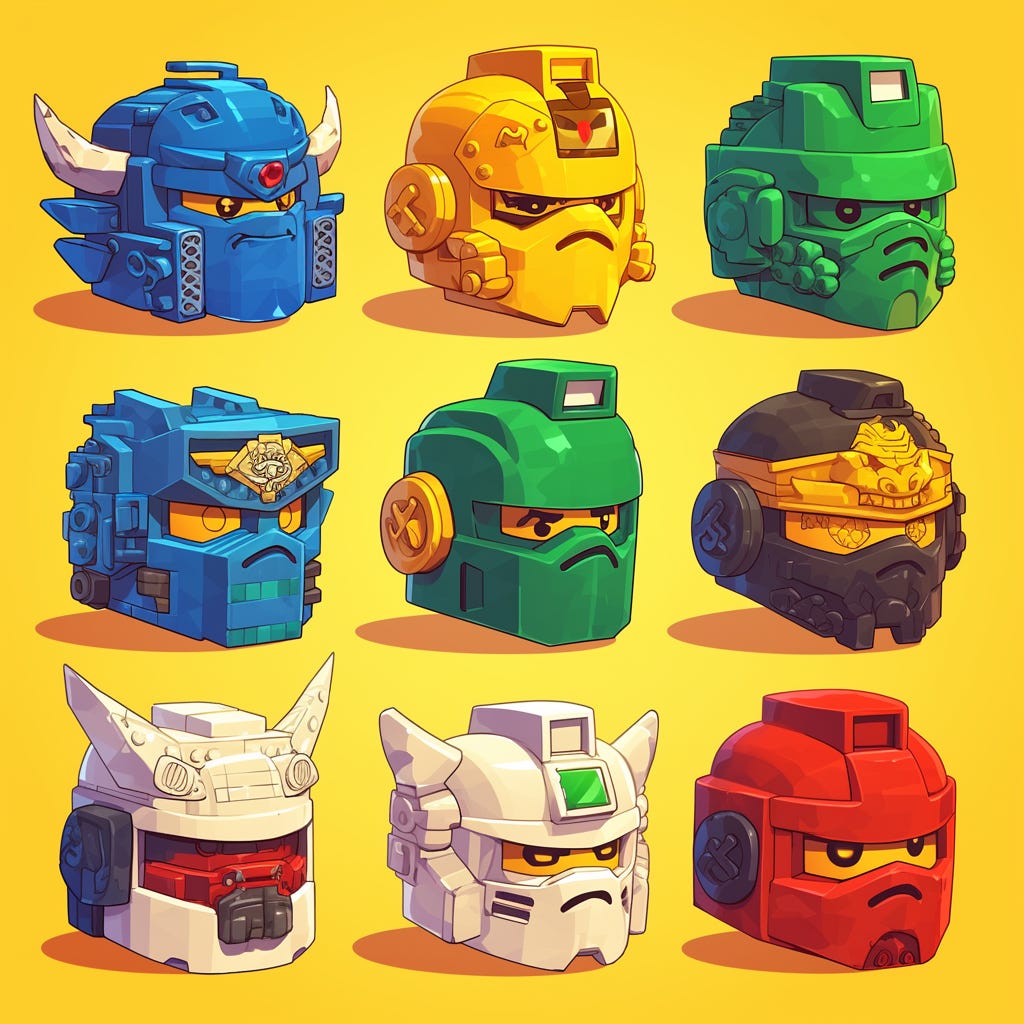
Sprite Sheet Style Prompt
[SUBJECT] sprite sheet for mobile game, in the style of [STYLE] --niji 6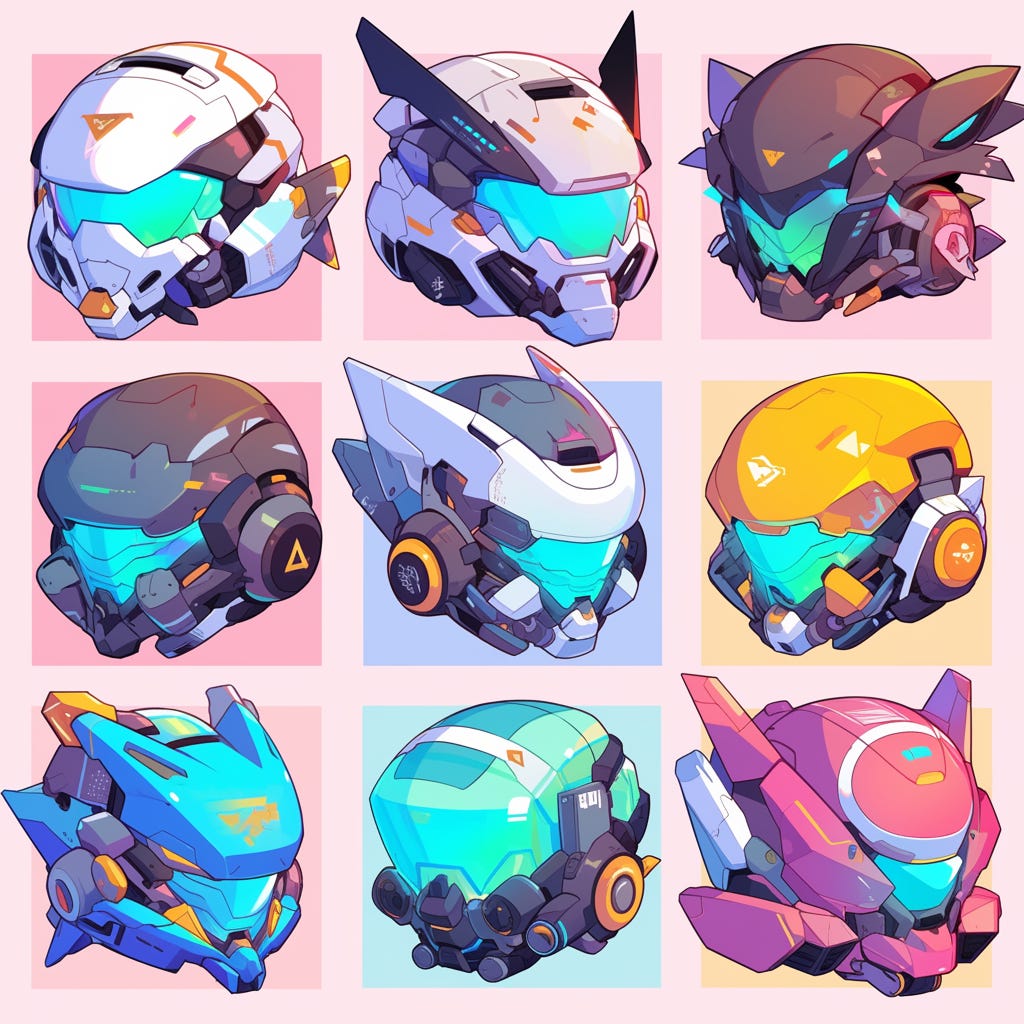
Sprite Sheet Quick Prompt
sprite sheet for mobile game, [SUBJECT] --niji 6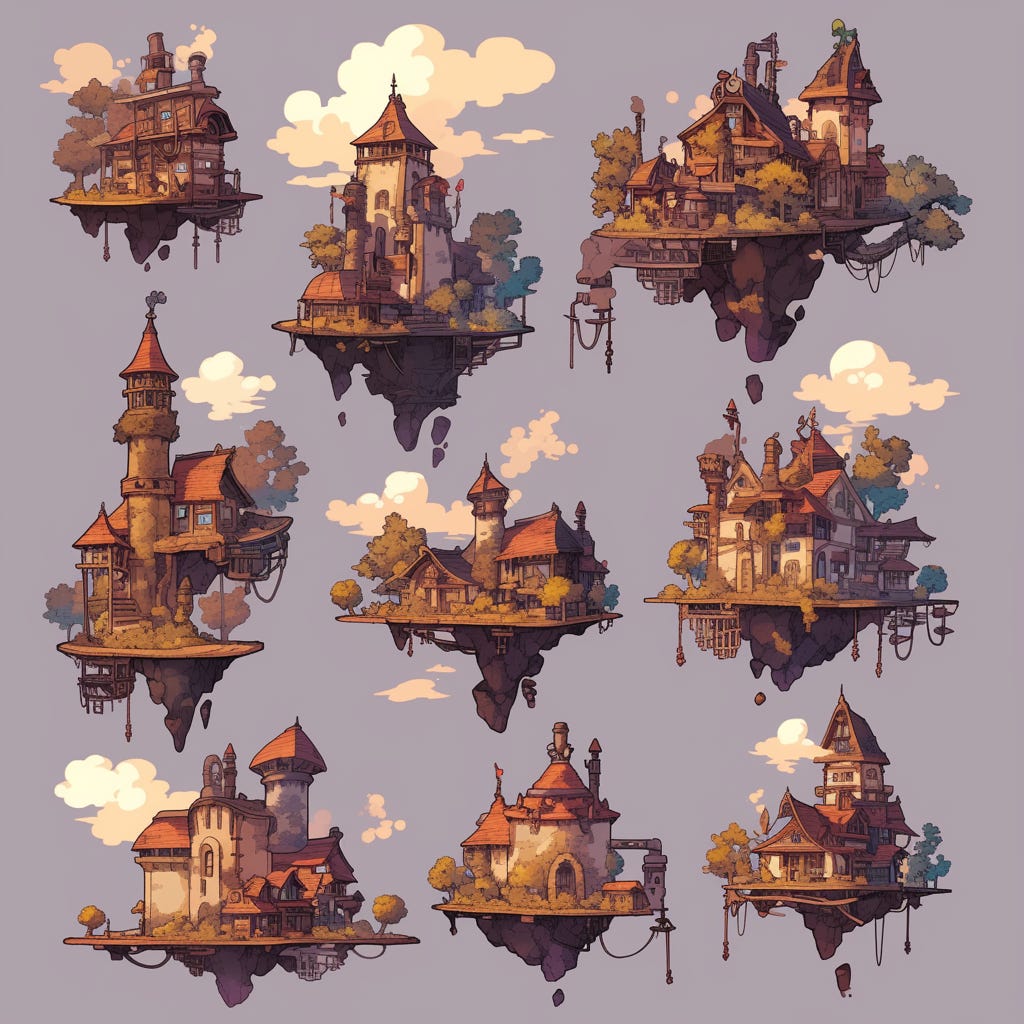

Multiple animation frames in a single image file.
Sprite sheets can be for Icons, Characters, Objects etc.
Multiple characters or objects on a single image.
Single character shown in different poses, actions and expressions.
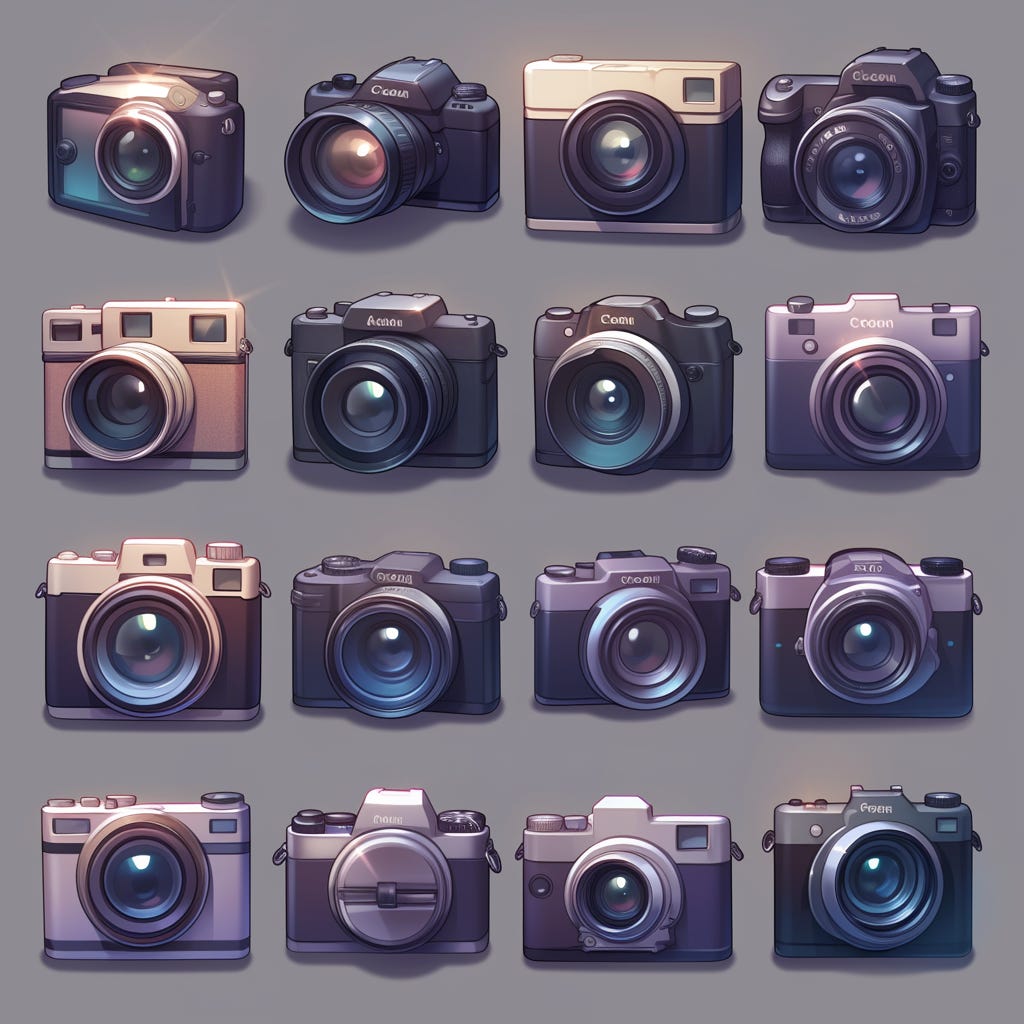

The use of Sprite Sheets has been a staple in video game development since the early days of arcade games and home consoles. This method was crucial for overcoming the limitations of hardware, allowing developers to create rich, engaging game worlds within tight memory constraints.

Shigeru Miyamoto - His work with Nintendo, creating iconic games that utilized sprites effectively.
Toby Fox - Creator of "Undertale," known for its unique use of sprite animation to tell a story.
Eric Barone - Developed "Stardew Valley," showcasing the power of sprites in creating immersive game environments.